
With the knowledge of the basics, sewing can be a relaxing and creative activity. Among the initial skills a beginner must learn is how to correctly thread a Sewing Machine. The machine may have skipped stitches, tangled thread or broken needles if it is threaded in the wrong direction. That is why Sewing Machine Threading is significant!
Whether you are a sewing novice or come back after a long period of hiatus, this guide will help you to grasp each crucial step. Upper threading lower threading bobbin set-up and needle position will be explained in a very simple way. At the end you will be more confident in using your sewing machine.
The importance of proper Sewing Machine Threading.
A lot of issues with sewing machines occur because the machine has not been threaded properly. Practice the correct technique for Threading A Sewing Machine and your stitches will be smoother and cleaner. The machine is quieter and more efficient as well.
If the threading is done incorrectly, bunching of threads underneath the fabric will occur. Also can cause needle to unthread itself while sewing. The Sewing Machine How To Guide: Learning How To Thread the Sewing Machine The Right Way Saves time and frustration in sewing.
Today, most sewing machines have a Sewing Machine Thread Guide that is printed directly on the body of the machine. This guide is designed to assist users in making sure that they take the proper route with the upper thread and bobbin thread. Though your machine may seem complicated, the process of threading is typically easy to understand once you know what you are doing.
Getting the hang of Upper Threading Vs Lower Threading
Before starting it helps to know the difference between Upper Threading Vs Lower Threading. With these two systems combined, stitches are created.
The top thread is from the spool that is on top of the machine. It passes through the needle, the Thread Guide Sewing Machine system, and finally the needle. The lower thread is from the bobbin under the needle plate.
Either thread may be wound incorrectly resulting in improperly formed stitches. This is why both are essential when learning How To Thread My Sewing Machine.
Upper threading includes:
- Placing the spool
- The Sewing Machine Thread Guide is one of the following:
- Passing the thread through the tension discs.
- Threading the needle
Lower threading includes:
- Winding the bobbin
- Place the bobbin into the correct position
- Stopping to pull up the bobbin thread.”Stopping to pull up the bobbin thread.
Once you are familiar with these two systems, the whole process will be easier.
How To Load A Sewing Machine Correctly – Easy Sewing Steps
How to load a sewing machine is a question many beginners ask even before they can begin sewing. Loading the machine involves setting up the machine and placing both the spool and bobbin in the machine in preparation for stitching.
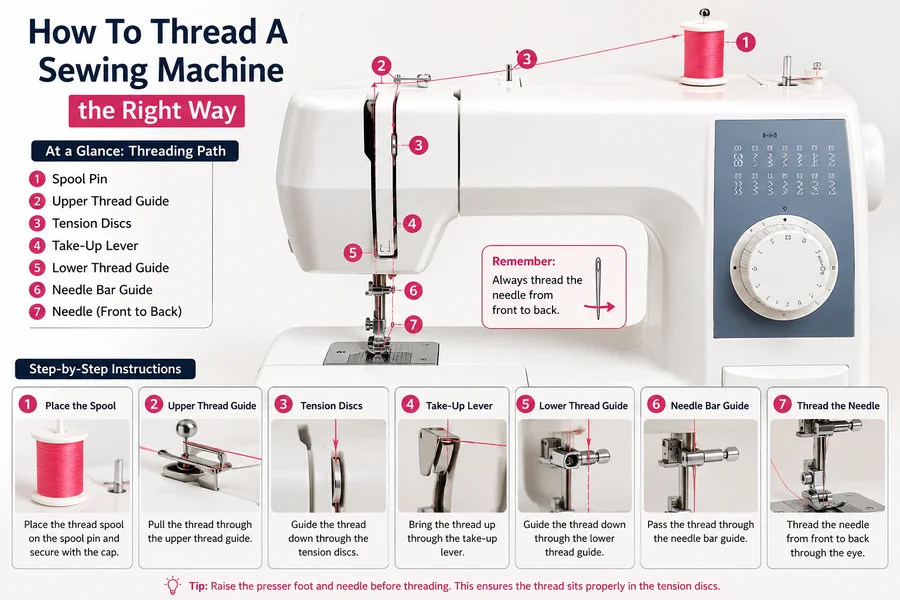
First shut down the machine. Lift the presser foot and move the needle to the top. This will facilitate the proper passage of the thread through the tension system.
Place the spool of thread on the spool pin. Some machines are fitted with spool pins that are horizontal; others have vertical pins. Ensure that the spool is securely in place.
Then sew along the Sewing Machine Thread Guide which is printed on the sewing machine. Most machines indicate the thread path with arrows numbered with a number. Carefully feed the thread through each guide.
When learning How To Put Thread On Sewing Machine always avoid pulling the thread too tightly. Light tension is preferable.
After completing the upper threading prepare the bobbin. This is another one of the key elements of the preparation of the Thread Sewing Machine.
How To Thread A Sewing Machine Step By Step Sewing machines are used to sew one piece of fabric to another.
Let’s now cover How To Thread A Sewing Machine Step By Step – Beginner Friendly.
Place the Thread Spool in Step 1.
Put the spool on the spool pin. Secure with the spool cap (if applicable).
In Step 2 you will follow the thread path.
Follow the Sewing Machine Thread Guide to pass the thread through each slot and the guide. Most machines have arrows showing the direction.
Pass through the Tension Discs: Step 3
Take the thread down and wrap it through the tension mechanism. This is necessary to keep stitches in balance.
Step 4: Pass the Take Up Lever
Slide the thread up and over the take up lever. This is the lever that is used to move the thread when stitching.
Step 5: Pass your needle through the thread.
You’re now prepared with How To Thread Sewing Machine Needle. Weave the thread through the last guide, above the needle.
Step 6: Take thread through the needle
Thread a Sewing Machine Needle by putting the thread through the eye of the needle.
Step 7: Pull Up the Bobbin Thread
Grip top thread lightly, and spin the hand wheel towards the fingers. This action causes the bobbin thread to be pulled upward.
When both threads are under the presser foot your machine is ready to sew.
Thread A Sewing Machine Needle Easily!
How To Thread Sewing Machine Needle can be difficult for many people to get right, as the needle eye is too small. Good lighting is of great assistance in this process.
Trim the thread with sharp scissors. A clean edge will glide through the needle easier. Keep the thread firm and carefully thread it through the eye of the needle.
Some modern machines come with automatic needle threaders. These are the tools which will help beginners to make their work easier with Thread Needle Sewing Machine.
Do You Thread A Sewing Machine Needle Front To Back is a frequently asked question. Yes, for most home sewing machines. The thread is generally held from front to back in the eye of the needle.
However, you should consult your machine manual as a few specialty machines have side threading.
Knowing Which Way Does Thread Go On Sewing Machine will prevent skipped stitches and broken thread.
Draw A Diagram How To Thread A Sewing Machine Bobbin.
It can be confusing at first to understand the bobbin system. Consider using a Diagram How To Thread A Sewing Machine Bobbin to better explain the setup to the beginning seamstress.
There are two types of bobbins most sewing machines have; a front loading bobbin or a top drop in bobbin. A bit of the threading varies from style.
With a top loading bobbin:
- Open up the bobbin cover
- Place the bobbin in the case.
- Follow the directions of the arrows that indicate the direction of the thread
- Pass the thread through the bobbin guide.
If it is a front loading bobbin:
- Take out the bobbin case.
- Carefully insert the bobbin.
- Thread the needle through the hole.
- Take case back to the machine
Sewing Machine Threading is very important regarding correct bobbin setup. The bobbin can turn in the wrong direction, which can result in loose or tangled stitches.
Test the machine on scrap fabric before beginning your project.
Common Sewing Machine Errors–Threading
Even some old sewing hands can make mistakes with the thread. Here are a few common issues to avoid while Threading A Sewing Machine.
Forgetting to Raise the Presser Foot
If the presser foot is not lifted up, the thread could not be inserted properly into the tension discs.
NO THREAD GUIDE!
All guides of the Thread Guide Sewing Machine path are significant. If one is skipped, it can impact on stitch quality.
Incorrect Needle Direction
Needles must be held in the proper direction as it varies according to the type of machine.
Poor Bobbin Placement
The bobbin usually jams under the fabric due to incorrect bobbin direction.
Using Old Thread
Weak or dusty thread is liable to break during sewing.
If problems continue rethread the entire machine slowly. A lot of problems just vanish because of the proper Sewing Machine Threading.
Hints on Sewing Machine Threading
My Sewing Machine Threading is a skill that is mastered with practice. For those that are just beginning, these tips can help them work with more confidence.
Regularly clean your machine
Change dull needles as needed and often
Use quality thread
Carefully follow the machine manual
Do multiple threadings practise.
Check stitches in test swatches prior to projects.
Do not rush when learning How To Put Thread On Sewing Machine. Fastness is a natural progression.
It is also important to know Which Way Does Thread Go On Sewing Machine since all sewing machines have a direction in which they are threaded.
When you know How To Thread The Sewing Machine, then you will enjoy sewing more.
Final Thought
One of the first sewing skills is How To Thread A Sewing Machine. Initially, this can be a challenge but with practice and patience, it gets better. Having knowledge of Upper Threading Vs Lower Threading also aids in the resolution of common sewing problems.
From learning How To Thread A Sewing Machine Needle to How To Load A Sewing Machine correctly, every step is important to producing clean and professional sewing stitches. Handle the Sewing Machine Thread Guide with care and always check the bobbin set-up before you sew.
After a while, with constant practice, Thread Sewing Machine tasks will appear natural and simple. With the right threading, you can get back to creating and have fun with the process.
FAQs About How To Thread A Sewing Machine
How often should I rethread my sewing machine?
You should rethread the machine whenever the thread breaks after changing thread colors or if stitches start looking uneven.
Do You Thread A Sewing Machine Needle Front To Back on every machine?
Most home sewing machines use front to back threading but some specialty machines may differ. Always check the manual.
Why does my thread keep tangling underneath the fabric?
This usually happens because of incorrect bobbin placement or improper upper threading.
Can beginners learn Sewing Machine Threading quickly?
Yes. With practice and patience most beginners learn basic threading within a few sewing sessions.
What is the easiest way to remember How To Thread Sewing Machine Needle?
Follow the Sewing Machine Thread Guide carefully and practice the same sequence every time.
Why is the bobbin important in Thread Sewing Machine setup?
The bobbin provides the lower thread which works together with the upper thread to form stitches.
What should I do if my machine still will not sew properly?
Remove all thread and start the entire threading process again step by step.
